
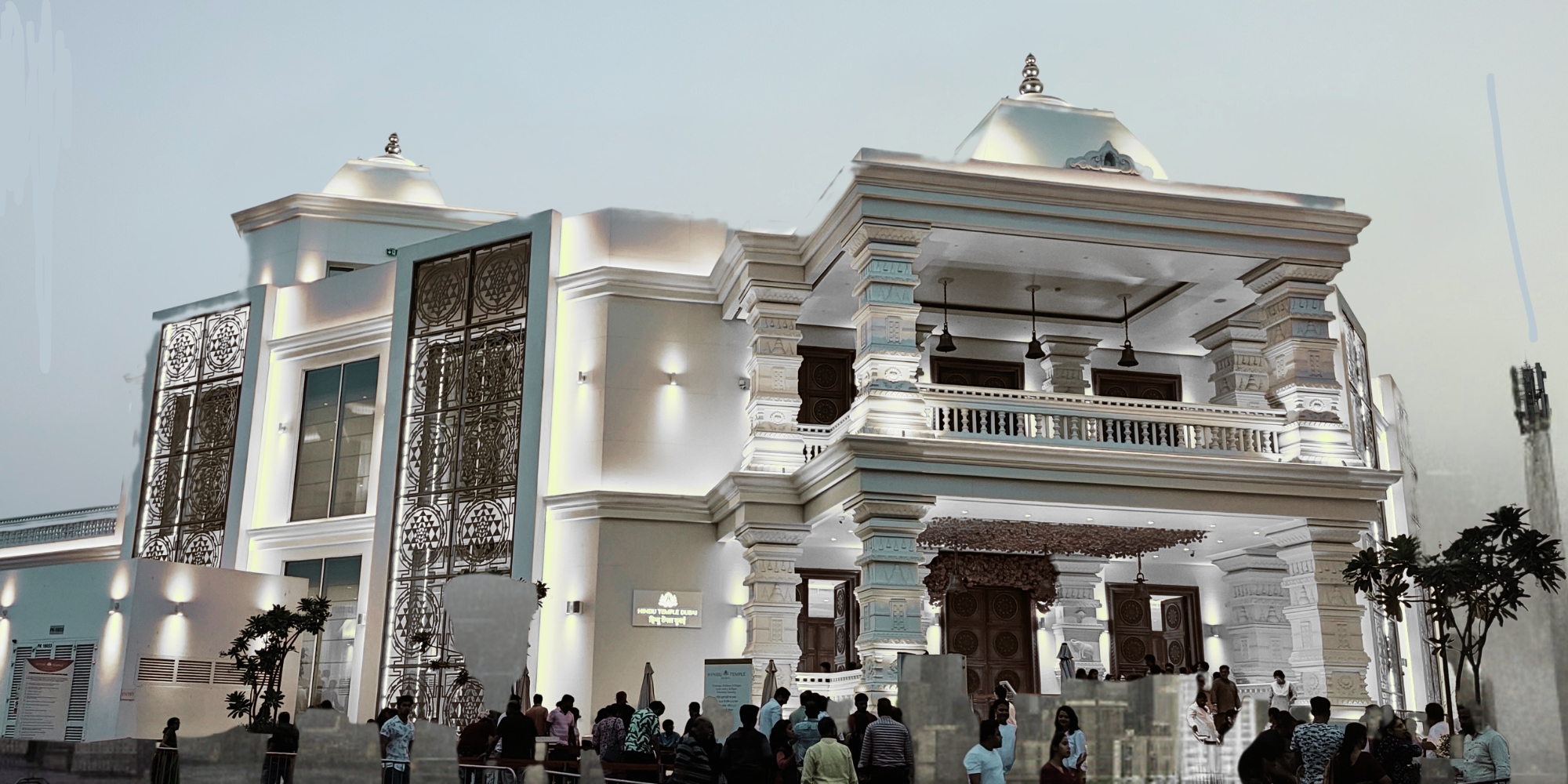
A Home Away from Home
Hindu temples have become more than just places of worship for many Indians living in Dubai, instead becoming a form of cultural and emotional home. Amidst the futuristic skyline that is adorning the city, temples have been remarkably successful at inducing a sense of serenity, urging the worshippers to yoga associate with the basic traditions and rituals accompanying them from their homelands. Offering daily prayers, grand festival celebrations-all find a platform for the community to come together, evoking the religious and cultural roots, now planted in an alien land.
The Iconic Shiva Temple in Bur Dubai
One of the oldest and most esteemed shrines of the Hindus in Dubai is the Shiva Temple tucked away in Bur Dubai. Nestled in the ever enervating Al Fahidi area, this temple attracts thousands to its sacred folding doors every year. It does not boast large premises, but what it lacks in space is made up for in weighty importance, offering a sacred space for practitioners to carry out rituals, blessings, and religious occasions. The temple is electrifying during festivals such as Maha Shivaratri, when devotees storm in for nightlong prayers and offerings.
How to reach these places
- You can book a RTA taxi or a ride-hailing service like Uber or Careem and set your destination to Bur Dubai Old Souk or Dubai Grand Mosque (as the temple is located nearby).
- If driving, parking might be challenging due to the narrow lanes, so consider parking at a nearby mall or paid parking lot.
Krishna and Guruvayur Temples: Devotion and Culture
These temples of Krishna and Guruvayurappan forge the strongest links between the Indians in Dubai at a spiritual level. These are pretty much South Indian temples, where they have priests performing daily pujas, bhajans, and sthalam, making every worshiper groove into the temple in India. Soothing chants, rhythmic bells, and the aroma of incense put their devotees on the road to the Indian temples. Such temples are also centers of cultural activities where spiritual discourses, classical music performances, and community gatherings occur.
How to reach these places
- You can simply book a taxi to “Bur Dubai Hindu Temple” or “Shiva Temple” in Al Fahidi.
- Parking in this area is limited, so it’s advisable to use public transport.
Hindu Festivals in Dubai: An Extraordinarily Big Event
Dubai’s Hindu temples become lively during occasions such as Diwali, Navratri, and Janmashtami. For Indians in Dubai, these occasions are the most enthusiastic times when they decorate temples with flowers, lights, and traditional diyas. Together, the community gathers for bhajans, dance performances, and prasad distribution. A convincing indication of this commitment to tolerance and multiculturalism is found in how magnificently these celebrations are celebrated.
Future of Hindu Temples in Dubai
The larger temple spaces have been recognized with the growing Indian population in Dubai. The recently opened Hindu temple at Jebel Ali is a hallmark of this advancement. Built with breathtaking architectures, it caters to several deities and contains an expanded area for offering and granting festivals for both the worshipers and the coming settlers. Such constructions of temples are always backed by the UAE government’s policies as they reflect the vision of the country in terms of inclusiveness. Thus, with the coming of several temples, Dubai continues to enforce its position as a sanctuary for spiritual Indian settlement out there.